
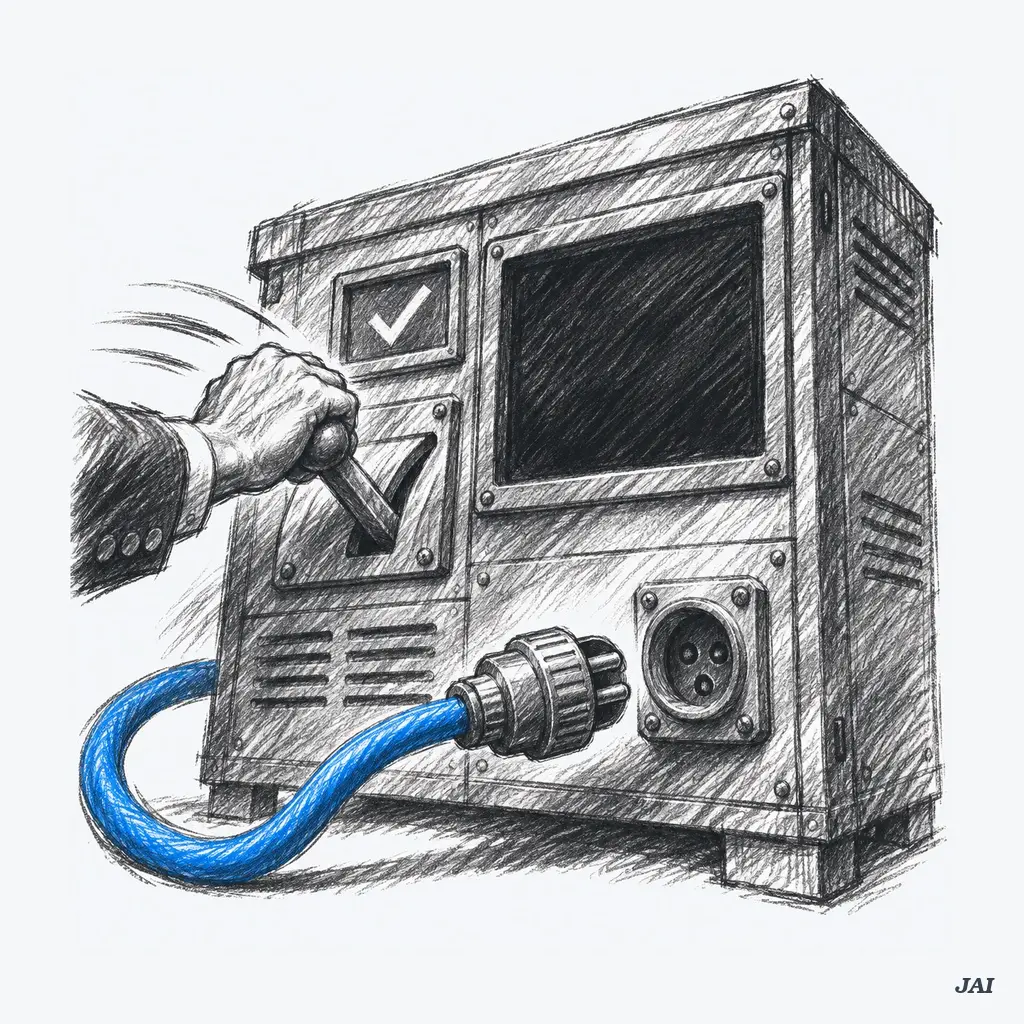
We're Patching Faster Than We Can Recover
In November 2024, four unrelated critical systems failed within weeks of each other. Microsoft 365 went dark for nearly 24 hours. The FAA grounded flights nationwide. JPMorgan Chase slowed transactions across multiple banks. The NSA's classified internal network stopped working.
No cyberattacks. No common thread. Just four separate incidents where essential infrastructure simply... stopped.
Then we learned the causes. Director of National Intelligence Jay Clayton linked the NSA disruption to patching a PHP vulnerability — one identified with AI assistance. Microsoft traced their outage to a defect several months old that surfaced during remediation.
Here's the pattern I'm seeing in my work: AI is accelerating vulnerability discovery faster than our operations can safely absorb the fixes. And we're about to learn an expensive lesson about the difference between patching fast and patching well.
The Speed Trap We Built for Ourselves
I was reviewing patch compliance dashboards with a financial services client last month. Every metric was green. Mean time to patch: 11 days, well under their 14-day SLA. Board reporting looked flawless.
Then I asked: "Show me your last five rollbacks."
Silence.
They had a detailed runbook for applying patches. Nothing documented for undoing them. No tested restore points. No verified recovery sequence. Their dashboard measured how fast they could break things, not whether they could fix them.
This is the trap. AI-assisted vulnerability scanning is finding bugs at machine speed. Coordinated disclosure timelines are compressing. The window between "we found it" and "everyone knows about it" is shrinking. So security teams do what they're measured on: they patch fast.
But staffing didn't double. Test environments didn't expand. Maintenance windows didn't grow. Something has to give.
When Security Updates Become Security Failures
Samuel Hassine from Filigran made the point that stuck with me: a fix that takes a service offline is also a security failure.
Think back to July 2024. CrowdStrike pushed a content update — a security fix, shipped urgently — that crashed roughly 8.5 million Windows machines. It wasn't malicious. It wasn't even technically a software update. It was a signature file, the kind of thing that's supposed to be safe to deploy continuously.
Except there was no simple rollback. IT teams had to boot each machine into safe mode and manually delete a file. For organizations with thousands of endpoints, that meant days of manual recovery. Delta Air Lines alone canceled 7,000 flights.
The math was correct. The threat was real. The fix was necessary. But nobody modeled what happens when the fix itself fails at scale.
I've spent 25 years watching technology disruption cycles play out. The internet disrupted media distribution. Mobile disrupted retail operations. Cloud disrupted infrastructure management. Each time, the pattern is the same: the technology gets faster, and the humans operating it don't.
We're in that gap right now with AI-accelerated security operations.
The Railroad Doesn't Arrive on the Day You Notice
Nobody gets fired the day the railroad arrives. The town just slowly empties out.
That's what's happening here. The outages in November weren't caused by AI directly. They were caused by operational processes designed for a world where vulnerabilities were discovered at human speed, where you had weeks to plan a maintenance window, where rollback was an edge case.
AI changed the tempo. We're still running the old playbook.
Retailers figured this out decades ago. Try pushing a major infrastructure change on Black Friday and see what happens. They run change freezes because they've learned that availability is a security control. A system that's down can't process transactions, can't enforce access controls, can't log suspicious activity.
Financial services knows this too — or should. When JPMorgan Chase has a processing issue, it doesn't just affect JPMorgan. It ripples through correspondent banking relationships, payment networks, settlement systems. The interconnectedness means a localized failure becomes a systemic risk.
The question isn't whether to patch. It's whether your organization can survive patching at the new pace AI is setting.
What Your Dashboard Isn't Measuring
I've reviewed a lot of patch-SLA dashboards. Most measure speed. Almost none measure survivability.
Here's what I mean. Your dashboard shows you patched 94% of critical vulnerabilities within your 14-day window. Excellent. Now answer this:
-
Of those patches, how many have a tested rollback procedure?
-
If your most critical system breaks during the next emergency patch, how long until you're operational again?
-
Who decides whether to patch immediately or wait for the next maintenance window when those two things conflict?
The hardest question: If your fastest patch took down your busiest system, who in your organization owns that decision?
In most places I work, the answer is "it depends" or "we'd figure it out." That's not a governance model. That's hope.
Four Things to Ask Before Your Next Risk Committee Meeting
If you're heading into a board meeting, an audit committee review, or a risk assessment, here's what I'd want documented:
1. A named owner for the patch-versus-uptime tradeoff. Not a committee. Not a process. A person who can make the call at 2am when a zero-day drops and your maintenance window is three days away.
2. A verified restore point that's actually been tested. "We have backups" isn't enough. When did you last restore from one? How long did it take? Did everything come back?
3. A rollback plan that someone has executed in the last 90 days. Not a document. Not a theory. Actual evidence that your team knows how to undo what they just did.
4. A documented recovery sequence for your five most critical services. Not "restore from backup." The actual steps: which systems come up first, what dependencies matter, how you verify each layer before moving to the next.
None of this is new technology. It's operational discipline we've known matters since the first time someone accidentally deleted a production database. (I've been that person. It was a long night. But what do I know — I've only watched this movie four times.)
The Uncomfortable Middle
Here's where I sit, and where I think you need to sit too: AI-accelerated vulnerability discovery is real and necessary, AND it's outrunning our ability to deploy fixes safely.
Both things are true. The vulnerabilities AI is finding are genuine. The pressure to patch quickly is legitimate. The threat actors are using the same tools to find the same bugs, and they're not waiting for your maintenance window.
But if we optimize purely for speed, we're going to see more outages like the ones in November. More CrowdStrike-scale disruptions. More moments where the fix is worse than the vulnerability it addressed.
The answer isn't to slow down patching. It's to invest in recovery capability at the same pace we're investing in detection capability. It's to treat rollback as a first-class operational requirement, not an afterthought. It's to recognize that in a world where AI finds bugs at machine speed, the differentiator isn't how fast you patch — it's how safely you can operate at that speed.
What to Do Monday Morning
Walk into your next operational review and ask this:
"Show me the last time we rolled back a security patch. How long did it take? What broke? What did we learn?"
If the answer is "we've never needed to," you're not prepared.
If the answer is "we don't track that," you're measuring the wrong things.
And if the answer is "we can't roll back most of what we deploy," you've built a system that can only move in one direction. That's not resilience. That's hope wearing a dashboard.
The railroad is here. The tempo has changed. The question is whether your operations can survive the new speed — or whether you'll be the next name in SecurityWeek's outage roundup, explaining to your board why your patch SLA looked great right up until the moment everything stopped working.
Who in your organization owns that decision?
Frequently asked questions
- How is AI changing the risk profile of security patching?
- AI is finding bugs faster than ever, which means more urgent fixes and compressed timelines for deployment. But staffing, test environments, and maintenance windows haven't scaled proportionally, creating pressure that leads to failures—like the CrowdStrike update that crashed 8.5 million Windows machines in July 2024.
- What's the relationship between patching speed and security?
- A fix that takes a service offline is itself a security failure. Measuring only patch-SLA speed (how fast you deploy) without measuring recoverability (can you roll back?) creates a false sense of security and masks real operational risk.
- What four things should organizations prepare before the next audit?
- A named owner for patching-vs.-uptime trade-offs; a verified restore point; a tested rollback plan; and a documented sequence for restoring services. These aren't new practices—retailers have used change freezes for years—but they're often overlooked in patch governance.
- Who should own the decision when a critical patch threatens system availability?
- The post asks this directly: if your fastest patch took down your busiest system, who in your organization owns that decision? This should be a named, accountable stakeholder at the leadership level, not an implicit assumption.
More Leadership Posts
The Future of Consulting: Embracing AI Without Losing the Human Touch
A deep dive into how management consulting is evolving with AI, featuring insights on client expectations, service deliv...
2 Ways to Learn to Manage
Discover two transformative approaches to mastering management: emulate respected leaders or learn from ineffective mana...
58% of Companies Block Access to Social Media Sites
I recently posted about the benefits of not blocking access to social media websites on the corporate network. Then I pi...