
The Railroad Builder Who Runs the Junction: Why "I Just Write Code" Won't Save Your DeFi Business
Every time a regulator publishes draft guidance, someone reads it looking for the exit.
In crypto right now, the exit people want is "DeFi developers are exempt." I get why. When the UK's Financial Conduct Authority dropped CP26/36 — their draft consultation on what counts as a regulated crypto activity — the industry scrambled to find the sentence that makes compliance someone else's problem. CryptoUK, representing more than 150 crypto companies, submitted a response arguing that software development, maintenance, security work, and decentralized governance participation should not, by themselves, establish that someone is carrying on a regulated activity.
That's an industry position in a consultation. It's not FCA policy. It's not an exemption. And it's not going to save you if you're laying the track and running the junction at the same time.
The FCA is aiming for final guidance in January 2027, with the regime starting in October 2027. If you advise a crypto business that touches the UK, you have eighteen months to answer a question most teams haven't even asked yet: who effectively controls the financial service?
The Railroad Metaphor Nobody Wants to Hear
Here's the useful part of CryptoUK's response — the part people skimmed past while hunting for the developer exemption: they backed the FCA's "clear controlling person" approach.
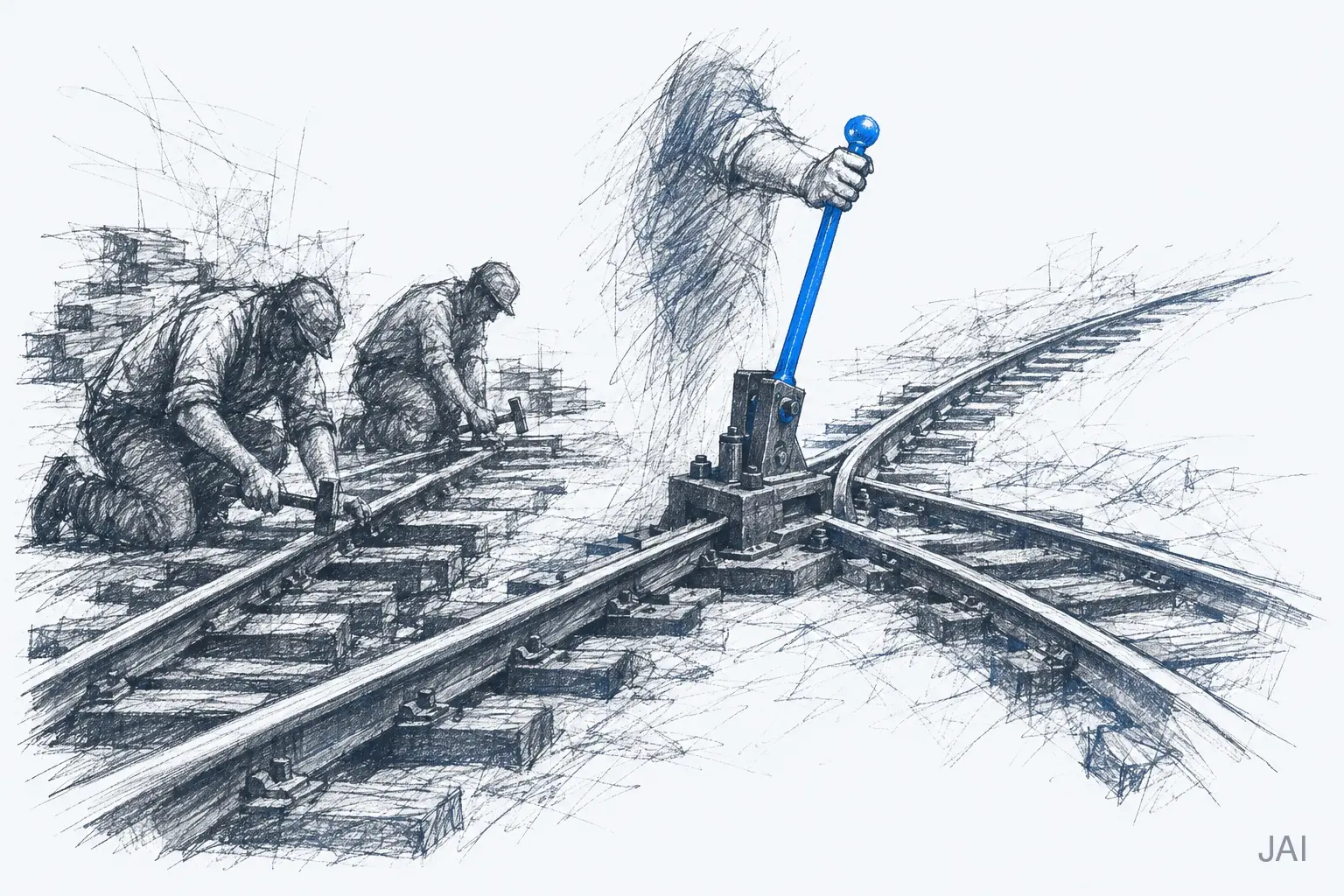
Think of a railroad. Laying the track is different from controlling the junction. The person who lays rail between two towns isn't deciding which cargo moves, when it moves, or who gets priority access. The person who controls the junction is.
The FCA doesn't care what your title says. It cares who controls the junction.
This isn't a legal test — it's a way to think about the problem. And the problem is that most crypto businesses have people doing both, and nobody has written down which is which. The smart contract developer who can redeploy the protocol with new parameters? Junction operator. The core team member who "just writes code" but also sits on the multisig that pauses withdrawals? Junction operator. The community participant who submits a governance proposal that redirects $50 million in treasury funds? Probably a junction operator.
I've watched this movie before. When the SEC went after unregistered broker-dealers in the late 1990s, every day trader with a chatroom suddenly discovered they were "just sharing ideas." When FinCEN clarified money transmission rules in 2013, every Bitcoin exchanger discovered they were "just running software." The regulator's response was the same both times: what you call it matters less than what you do.
What CryptoUK Actually Agreed To
Here's what gets lost in the hunt for exemptions: CryptoUK didn't just argue for carve-outs. They agreed with the FCA's core framework.
They supported the idea that the question isn't whether something is labeled DeFi, or whether a protocol is decentralized, or whether your GitHub says "community maintained." The question is who effectively controls the financial service. Who decides how customer assets move? Who can change the rules? Who profits when volume increases?
The FCA is building on a principle we've seen play out in traditional finance for decades: substance over form. It doesn't matter if you call yourself a technology provider if you're functionally operating as an exchange. It doesn't matter if you call it decentralized governance if three multisig holders can unilaterally freeze $200 million in customer funds.
This isn't even new in crypto. When the CFTC went after Ooki DAO in 2022, the defense was "it's decentralized, there's no controlling party." The CFTC's position: the DAO members who voted on proposals that controlled the protocol's economic activity were carrying on the business. The court agreed.
The UK is now codifying that logic into guidance. And you have eighteen months to get your story straight.
The Work Nobody's Done Yet
I was advising a client last month — mid-sized DeFi protocol, UK users, about to launch a governance token. The founder asked me, "Are we going to be regulated under this?"
I asked him: "Who can pause the protocol?"
"The multisig."
"Who's on the multisig?"
"Me, our CTO, and three community members."
"Who picked the community members?"
Long pause. "We did. For now."
"Who can redeploy the smart contracts if there's a bug?"
"Same group."
"Who decides which proposals go to a governance vote?"
Another pause. "We have a forum, but honestly, we still drive most of it."
He wasn't just laying track. He was running the junction, setting the schedule, and collecting the fares. And he genuinely believed that because the protocol was "decentralized," he was exempt.
This is the gap between the technology and the regulation. DeFi protocols are marketed as decentralized, trustless, and autonomous. But in practice, most have:
-
Core teams that control treasury multisigs
-
Developers who can upgrade smart contracts unilaterally
-
Governance structures where token concentration means three whales decide everything
-
"Emergency" powers that can freeze assets, pause trading, or redirect funds
None of that is inherently bad. But it is control. And control is what regulators care about.
The Three Questions You Should Be Asking Monday Morning
If you advise a crypto business that touches the UK — or any other jurisdiction watching how the FCA's approach plays out — here's where the work is:
1. Which activities do we believe sit outside the perimeter?
Not "which activities do we hope sit outside the perimeter." Which ones can you defend with a straight face in front of a regulator? Writing open-source code that someone else deploys? Probably safe. Writing open-source code, deploying it yourself, maintaining upgrade keys, and taking a protocol fee? Not safe.
2. Who controls the service?
Not who the marketing deck says controls it. Who actually does. Can you name them? Can you show, with evidence, that control is genuinely decentralized — or that the people who do control it are authorized and compliant?
If your answer is "the community," I need you to show me the on-chain data, the governance participation rates, the token distribution, and the emergency powers that override all of it.
3. What evidence supports that?
This is the part that separates the serious operators from the people hoping to stay under the radar. Do you have documentation? A legal memo? A governance framework that's actually implemented, not just proposed? A record of who made which decisions and when?
Because here's what I've learned from watching enforcement actions over twenty years: the regulator doesn't start with the people who have good answers to these questions. They start with the people who don't have answers at all.
Why This Matters Beyond Crypto
You might be reading this and thinking, "I don't work in crypto, why should I care?"
Because this is the same pattern that plays out every time a new technology tries to route around regulation by redefining terms. We've seen it in peer-to-peer lending ("we're just a platform"). We've seen it in gig economy companies ("they're contractors, not employees"). We've seen it in robo-advisors ("we're technology, not investment advice").
The lesson is always the same: regulators look past the label and ask who bears the risk, who makes the decisions, and who profits from the arrangement.
If you're in financial services, accounting, or advisory — if you're responsible for clients or firms trying to integrate blockchain technology or digital assets — this is your preview. The "it's decentralized so nobody's responsible" defense is dying in real time. And the businesses that survive are the ones that stop looking for the exit and start building the documentation that proves they know exactly who controls what.
The Guidance That's Coming
The FCA's final guidance drops in January 2027. The regime goes live in October 2027. That sounds like a long time. It isn't.
If you're advising a crypto business, you need to map control now. Not when the final guidance publishes. Not when the regime goes live. Now. Because if the answer is "it's complicated" or "we're decentralizing soon" or "we're not sure," you don't have eighteen months to get compliant. You have eighteen months to decide whether you're staying in the UK market at all.
And if you're a fiduciary advising clients who are integrating digital assets — CFOs considering stablecoin treasury strategies, audit partners reviewing crypto holdings, risk officers evaluating DeFi protocols for institutional exposure — you need to ask the control question every single time. Not "is this DeFi?" Not "is this decentralized?" Who controls the junction?
Nobody gets fired the day the railroad arrives. The town just slowly empties out. But in this case, the FCA is telling you exactly when the train is coming and what documentation you need to stay on the platform.
The industry response was to look for the exemption. The professional response is to map the control, document the evidence, and make sure that if a regulator ever asks "who runs this," you can answer in one sentence.
What to do Monday morning:
Pull the org chart for any crypto business or DeFi protocol you advise or oversee. Identify every person or entity with the power to pause, upgrade, redeploy, or redirect funds. Write down their names, their roles, and the evidence that supports who actually controls the financial service. If you can't finish that exercise in an hour, you've just identified your regulatory risk.
Frequently asked questions
- Is there a DeFi developer exemption in the FCA's new guidance?
- No. CryptoUK's response to the FCA's consultation requested a developer exemption, but that is an industry position, not FCA policy or final guidance. The FCA is aiming for final guidance in January, with the regime starting in October 2027.
- What does the FCA actually care about when evaluating crypto activities?
- The FCA is using a 'clear controlling person' approach. The question isn't whether something is called DeFi or what someone's title is—it's who effectively controls the financial service.
- What's the main challenge for crypto businesses under this framework?
- Most crypto businesses have people doing both development work and controlling services, but haven't documented which activities sit outside the regulatory perimeter and who controls what. That documentation and clarity is where the real work needs to happen.
- What should crypto advisors focus on when advising UK-touching businesses?
- Identify which activities sit outside the regulatory perimeter, determine who controls the service, and document the evidence supporting that analysis.
More Blockchain Posts
The Future of Finance: How Blockchain is Reshaping Traditional Banking
An in-depth conversation about blockchain adoption in traditional financial institutions, regulatory challenges, and the...
Blockchain: The Foundation of a Decentralized Future
Welcome back to the final post in our blockchain series!...
51% Attack Prevention | Enterprise Blockchain Security & Emergency Response Guide
Comprehensive enterprise guide to 51% attack prevention, detection, and emergency response strategies for blockchain net...