
Your Vendor Risk Assessment Is Already Out of Date
Pull out your last vendor risk review. I'm serious—the SOC 2 reports, the questionnaires, that spreadsheet where you marked everything green because the vendor answered "yes" to all the right questions. How old is the newest one? Six months? A year?
While you were waiting for the annual refresh, attackers automated the entire intrusion process down to three hours.
Last month the FBI issued a warning about ARTEX, an open-source AI framework that's letting people with "minimal technical expertise" run sophisticated attacks at scale. We're not talking about nation-states anymore. We're talking about anyone who can follow a tutorial automating break-ins across thousands of targets simultaneously.
And they're not attacking you directly. They're attacking the vendors you approved two years ago and forgot about.
The Permissions You Gave Are the Weapons They Use
Here's what actually happened at ConnectWise in October. Attackers compromised the app identities behind its cloud backup service—the digital credentials that let the software do its job. Then they used ARTEX to try logging into 2,250 downstream Microsoft 365 tenants. Huntress reported at least 162 successful intrusions.
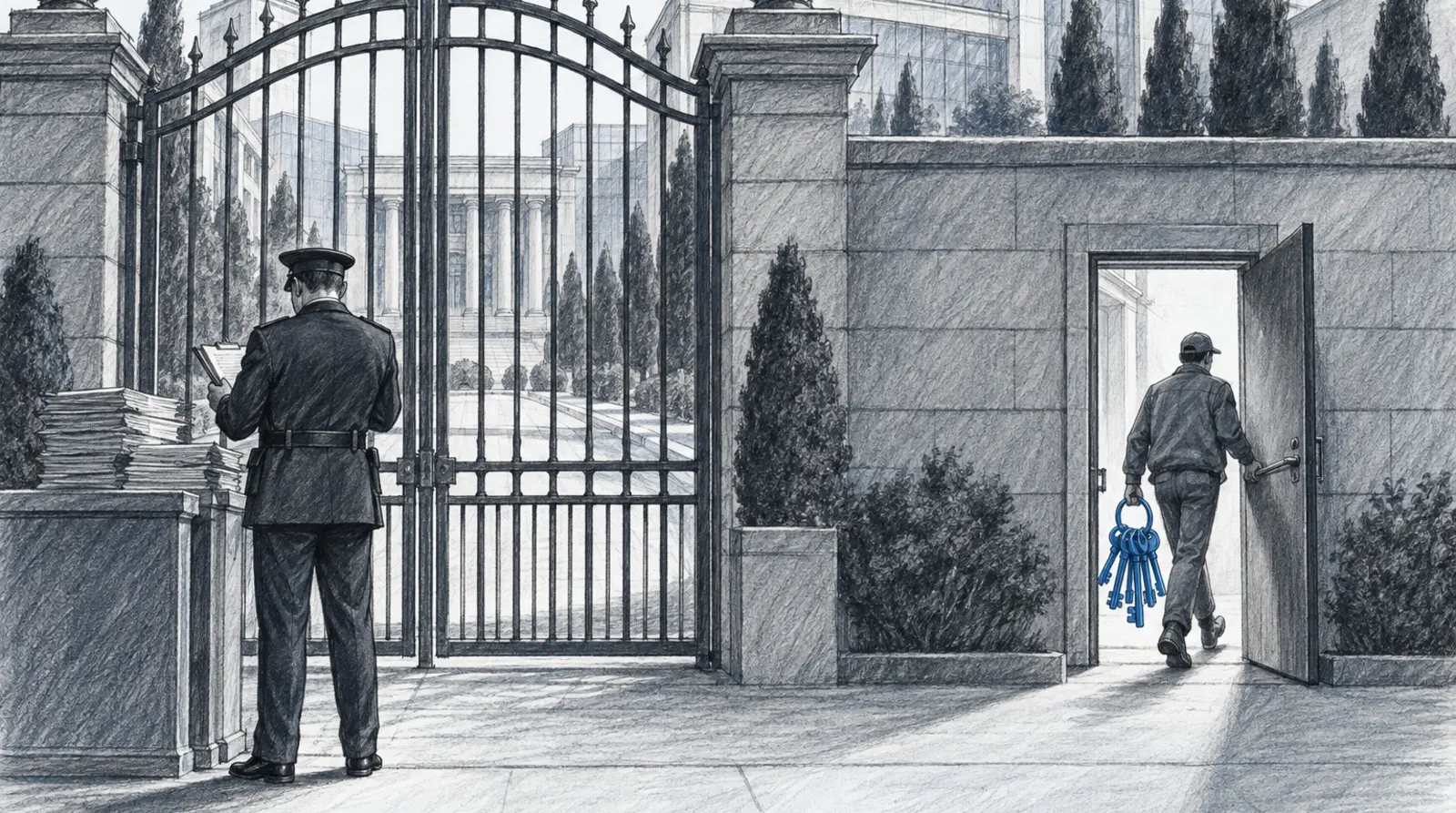
Nobody at those 162 organizations clicked a phishing link. Nobody wrote their password on a Post-it note. Somebody approved a backup application years ago, gave it privileged access, and nobody checked the permissions since.
The application did exactly what it was authorized to do. That's the whole problem.
Or take Notion. Some of its AI features run on a company called Fireworks AI. Fireworks got breached. AI chat transcripts from a small number of Notion workspaces—the actual conversations teams were having inside what they thought was a secure workspace—went out the door with the attackers. Fireworks had contractually committed to retaining zero Notion customer data. I'm sure it was a very good contract, with strong language and everything. The attackers didn't read it.
We're Running Last Year's Playbook Against This Year's Threat
I've been through enough cycles to recognize the pattern. When automated trading came to the NYSE, the competitive advantage went to whoever could process information fastest. The humans with decades of floor experience didn't become irrelevant because they were bad at their jobs. They became irrelevant because the game changed speed.
That's where we are with vendor risk. The traditional assessment model—annual reviews, control attestations, questionnaire responses—assumes a relatively static threat environment where you can check the box and move on. Attackers now operate in hours using tools that cost nothing and require minimal expertise, while your risk framework operates in fiscal quarters.
The gap isn't that your vendor risk program is poorly designed. The gap is that it was designed for a threat model that no longer exists.
This isn't hypothetical. I was talking to a CFO at a mid-sized advisory firm last month. They'd just discovered that a document collaboration tool—approved three years ago, used by maybe a dozen people—had read access to the entire shared drive. Nobody remembered granting it. Nobody had reviewed it since. When I asked how long it would take to revoke that access, the answer was "we'd have to open a ticket with IT, they'd have to find the admin account, then figure out where the integration lives."
Best case: two days. More likely: a week. The ConnectWise attackers moved from first access to privileged escalation in under three hours.
The Questions That Actually Matter
Here's what I'm bringing to every client risk meeting in 2027, and what you should ask Monday morning:
Which outside applications can authenticate into our environment? Not "which vendors do we have contracts with"—which apps have live credentials that let them log in right now. API keys, OAuth tokens, service accounts, whatever the technical term is at your shop. Make IT give you the list.
What data can each application actually reach? Not what the contract says it should access. What the permissions allow it to touch. If the answer is "we'd have to check," that's your answer—you don't know, which means you can't defend it.
How fast can we kill access? If one of those applications gets compromised tonight, how long until you can shut it down? If the answer involves opening a ticket, finding documentation, or figuring out who has admin rights, you're already in trouble. The standard you're measuring against is "can we do this in hours, not days."
I know what you're thinking—this sounds like a lot of work for a scenario that might never happen. But what do I know, I've only watched this movie four times. Attacks that used to require specialized skills and significant resources are now automated, commoditized, and running at scale.
The Control That Needs to Exist
The uncomfortable truth is that most organizations don't even have an inventory of active vendor access. They have a list of contracts. They have a procurement database. They have last year's vendor risk assessment scores. What they don't have is a real-time view of which external applications can authenticate into their environment and what those applications can do once they're in.
You can't protect what you can't see, and you can't revoke what you don't know exists.
This isn't a technology problem. The capabilities exist—identity and access management platforms, cloud access security brokers, privileged access management tools. This is an operational maturity problem. We've treated vendor access as a procurement and compliance exercise instead of an ongoing security control.
The fix isn't complicated, but it does require work:
Create and maintain an inventory of every application with authentication credentials to your environment. Not annually. Continuously.
Review the permissions each application actually has—not what the contract says, what the system shows. If your IT team can't produce this list in a day, that's your first priority.
Build a runbook for emergency revocation. When (not if) a vendor gets breached, how do you shut off their access in hours? Who makes the call? Who executes it? Have you tested the process?
Treat vendor access like you treat employee access. When someone leaves your firm, you disable their credentials immediately. When a vendor's security posture degrades or they suffer a breach, you should be able to move just as fast.
What to Do Monday Morning
Here's your specific action: Schedule 30 minutes with your IT or security lead. Bring three questions:
-
Which outside apps can log in to our environment right now?
-
What client data can each one reach?
-
How fast can we shut one off if we had to?
If you get clear answers backed by documentation, you're in better shape than most. If you get "we'd have to look into that," you just found how you're spending next quarter's risk budget.
The attackers already know what your vendors can access. They're checking right now, using tools that cost nothing and run automatically. The only question is whether you know it too—and whether you can move fast enough when it matters.
The annual vendor review served us well for two decades. But nobody gets fired the day the automation arrives. The control framework just slowly becomes irrelevant.
What's your plan for the three-hour breach?
Frequently asked questions
- What was the ARTEX attack and why is it a vendor risk problem?
- ARTEX is an open-source AI framework that attackers use to automate break-ins with minimal technical expertise. The ConnectWise incident showed attackers using stolen app identities to attempt logins across 2,250+ Microsoft 365 tenants in what amounted to automated, large-scale exploitation—demonstrating that vendor compromises can rapidly cascade downstream.
- Why do annual vendor reviews fail to prevent breaches like the Fireworks AI / Notion incident?
- Annual reviews check contracts and paperwork once a year, but attackers check and exploit standing permissions in an afternoon. In the Fireworks case, Notion data was breached despite contractual commitments to data isolation, exposing the gap between static audit cycles and continuous threat detection.
- What three questions should security teams ask about vendors in 2027?
- First, which outside apps can log in to your environment? Second, what client data can each one reach? Third, how fast can you shut one off? If the answer to the last question requires opening a vendor ticket, it signals a critical gap in your incident response capability that needs budget allocation.
More Leadership Posts
The Future of Consulting: Embracing AI Without Losing the Human Touch
A deep dive into how management consulting is evolving with AI, featuring insights on client expectations, service deliv...
2 Ways to Learn to Manage
Discover two transformative approaches to mastering management: emulate respected leaders or learn from ineffective mana...
58% of Companies Block Access to Social Media Sites
I recently posted about the benefits of not blocking access to social media websites on the corporate network. Then I pi...