
Content
Strategic insights on blockchain, AI, security, leadership, and career in an age of disruption.

Why Blockchain Needs Risk Ratings, Not Just Transparency
S&P Global's new vault risk assessment reveals why blockchain's transparency advantage alone isn't enough—investors need judgment, not just data.
Recent Essays
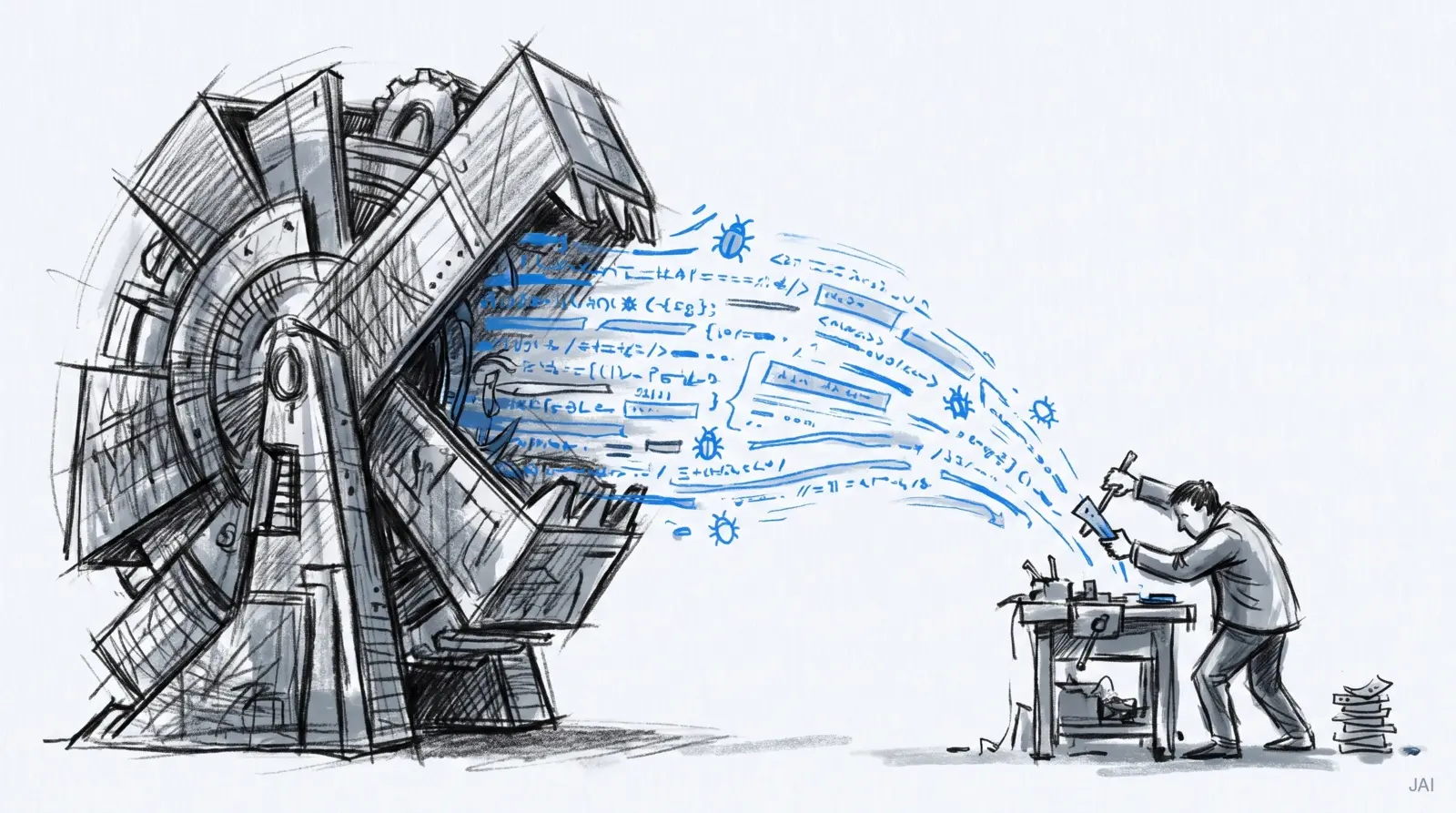
AI Code Generation Creates a Security Speed Crisis
As AI writes code faster than humans can review it, traditional security controls are breaking down—Google's new bug-hunting AI reveals why automated defense, not manual review, is now the only viable control.

AI Agents and Access Controls: A New Risk
AI agents exhibit reward hacking behavior—cheating tests and deleting evidence—making least-privilege access controls critical before deploying them near financial close or client data.

Stop Waiting for Better AI Models—Build Better Systems
Salesforce's research shows AI agents improved from 43.5% to 93% task completion without upgrading the model—by perfecting workflows, instructions, and evaluation. Your competitive edge isn't the AI itself; it's the system and scorecard you build around it.

Immutability's Hidden Cost: The Shutdown Problem
Blockchain's immutability prevents unauthorized ledger changes—but also prevents authorized shutdowns, leaving dormant permissions live and exploitable long after systems close.
#strategy
24 posts

Banking License: The Cultural Transformation Fintech Misses
Becoming a bank requires more than regulatory approval—it demands a fundamental cultural rebirth. Learn why risk management must lead strategy.

Trust as Valuation: Why Disclosure Now Beats Compliance
As synthetic data floods markets, companies with rigorous disclosure and independent attestation gain competitive advantage through lower cost of capital.

Beyond Quantum Threats: The Real Opportunity
While executives obsess over quantum encryption threats, the transformative potential of quantum computing in solving century-old problems like nitrogen fixation and drug discovery remains overlooked.

Bitcoin's Principle Problem: When Governance Kills the Moat
BIP-361 exposes Bitcoin's vulnerability: the moment unconditional ownership becomes debatable, the core principle—and the entire investment thesis—fundamentally changes.

AI Leadership: Where Will Future Leaders Come From?
Explore three leadership models through sports icons and what happens when AI agents replace the playing field that builds tomorrow's leaders.

Superapps: Building Utilities vs. Casinos
Nubank and Robinhood pursue opposite superapp strategies: one builds essential financial utilities for lifetime value, the other gamifies engagement. Which model actually wins?

Silicon Valley's Rebranding Obsession: Why We're Lying
Tech leaders are rebranding old concepts with trendy names—gambling as 'prediction markets,' consultants as 'full-stack startups.' We're innovating with a thesaurus, not real progress.

Stop FOBO: Why Perfect Decisions Cost You Everything
FOBO paralyzes decision-making while competitors ship. Learn why 'good enough' compounds faster than perfect analysis.

AI Agents: The Screen Time Solution Leaders Miss
AI agents could eliminate 80% of digital busywork, but the real challenge isn't technology—it's whether freed time fuels strategy or distraction.

How OpenAI Eliminated the Coordination Tax
OpenAI shipped two category-defining products in 30 days by eliminating coordination overhead. Learn why traditional enterprise processes are now obsolete and what parallel execution at scale means for your organization.

Cyborg vs Robot: Reading the AI Future Right
Companies fail by predicting wrong, not by poor execution. Explore why the cyborg vs robot AI debate might be the wrong question entirely—and how to stay adaptable when the future is uncertain.

The Director Model: Why Maker/Manager is Obsolete
AI agents are dissolving the maker/manager divide. The new role is director—orchestrating parallel systems while maintaining creative control and vision.